
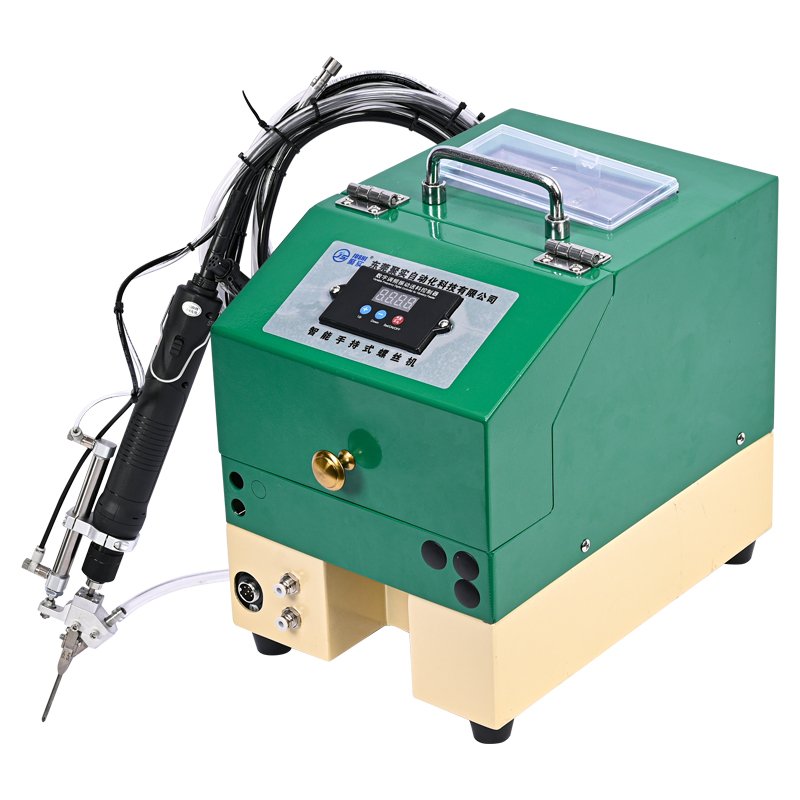
JS-SC-80 Handheld Screw Feeder with Large-Capacity Hoppe
Screw feeders are also one of Jushi’s main product categories. They are mainly designed for applications that require long screws. Small screw feeders have a lower cost, but they also have certain limitations on screw size. The screw shank diameter should not exceed 6 mm, and the screw length should not exceed 22 mm. By using a large screw feeder, the supported screw shank diameter can be increased from the original 6 mm, and the screw length can reach up to 35 mm. We manufacture screw feeders according to the screw size requirements commonly used in the market.
Product Introduction / PRODUCT INTRODUCTION
Screw feeders are also one of Jushi’s main product categories. They are mainly designed for applications that require long screws. Small screw feeders have a lower cost, but they also have certain limitations on screw size. The screw shank diameter should not exceed 6 mm, and the screw length should not exceed 22 mm. By using a large screw feeder, the supported screw shank diameter can be increased from the original 6 mm, and the screw length can reach up to 35 mm. We manufacture screw feeders according to the screw size requirements commonly used in the market.
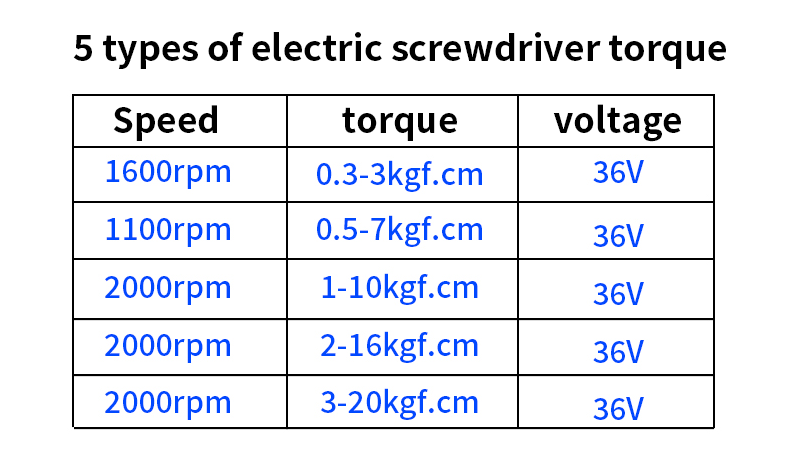
Electric Screwdriver Torque for Screw Locking Machines
At present, the electric screwdriver torque options for handheld screw locking machines can be divided into several levels: 0.3–3 kgf·cm, 0.5–7.0kgf·cm, 1–10 kgf·cm, 2–16 kgf·cm, and 3–20 kgf·cm. Users can choose the right electric screwdriver according to different torque requirements. Since many products have certain requirements for torque accuracy, selecting a suitable torque range can help reduce the production of defective products as much as possible. If you are not sure which option to choose, feel free to contact us for more information.
Key Points for Using a Handheld Screw Locking Machine
A screw locking machine can be suitable for many screw specifications, but can all screws be used on the same machine? Actually, the answer is no. Why? Because the screw feeding tube of the machine needs to be adjusted according to the screw size. For example, if the machine is set for screws with a diameter of 3 mm, screws with a diameter of 2.5 mm may not meet the feeding requirements.
It is not only the feeding tube that needs to be adjusted. Other parts, such as the screw separator, feeding tube, and clamping nozzle, may also need to be replaced. In this case, it is almost equivalent to changing to another machine. In addition, if factory workers are not very familiar with equipment assembly, reassembling these parts can be quite troublesome.
Therefore, we do not recommend using one machine for multiple screw specifications, unless the screw head diameters are very close. The screw length usually has a smaller impact.

Applicable Screw Types
There are many types of screws, such as iron screws, nickel-plated screws, stainless steel screws, zinc-plated screws, and more. In simple terms, they can be divided into two categories: magnetic screws and non-magnetic screws.
These two types require different feeding processes. In another article, we mentioned full push-pull feeding and semi push-pull feeding, which are two different solutions designed for magnetic and non-magnetic screws. There will also be a certain price difference between the two options, with a price gap of around RMB 180.
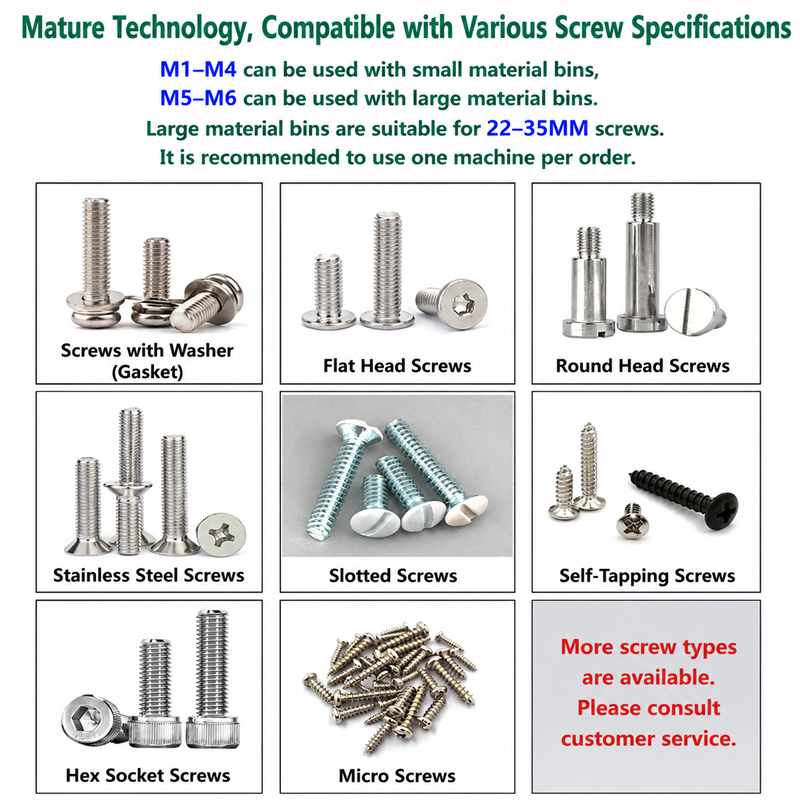
You can let us know your specific requirements.
Locking Depth of Applicable Products
As a standard type of machine, the handheld screw locking machine has certain limitations during use. For example, when using stainless steel screws, it cannot perform deep-hole screw locking. This product is mainly suitable for flat-surface products.
During screw locking, the clamping nozzle needs to hold the screw in place. If the clamping nozzle opens too early, the stainless steel screw may fall off, which will make screw locking impossible.
This is also the main reason why Xiaolu needs to receive your product samples and screws. Only after professional evaluation can we confirm whether the machine can meet your actual application requirements, which also helps avoid wasting everyone’s time.
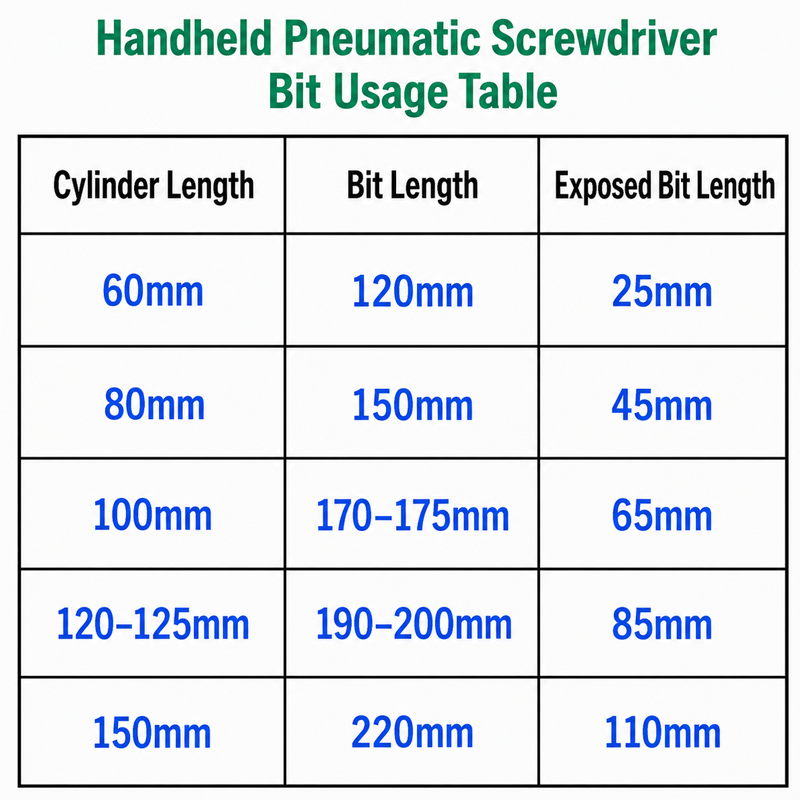
At present, Jushi uses screwdriver bits in lengths of 120 mm, 150 mm, 180 mm, and 220 mm. The first two sizes are commonly used. For some special products, the other two sizes may be required, especially for products with deep-hole screw locking requirements. In such cases, we can choose 180 mm or 220 mm screwdriver bits.
However, Xiaolu does not recommend using such long screwdriver bits. A longer screwdriver bit means that a longer air cylinder is needed. If the cylinder is too long, it may easily cause internal chamber failure, and the cylinder will need to be replaced with a new one. Therefore, if possible, we recommend using a shorter screwdriver bit.
For a 120 mm screwdriver bit, the exposed length is 15 mm. For a 150 mm screwdriver bit, the exposed length is 45 mm. These two sizes can basically meet the needs of most products on the market.
In addition to reducing the service life of the air cylinder, using a long screwdriver bit may also require replacing some clamping nozzles, which will increase the overall machine cost.
Of course, if you are currently producing in small batches or working with different product models, we still recommend using a handheld screw locking machine. Compared with labor costs, the cost of replacing screwdriver bits is lower, and the improvement in production efficiency is enough to offset the cost of purchasing additional air cylinders.
The main purpose of sharing this information is to let everyone know one thing: Jushi can meet different requirements for screw locking machines. As long as you tell us your specific needs, we will quickly communicate with our experienced factory engineers to confirm whether our machines can achieve automatic screw locking for your products.
In this way, we can help reduce product losses and improve production capacity. The advantage of a machine is that it can repeat the same action consistently without getting tired. However, manual operation may not always achieve the same result. The applied force may vary each time, the screw locking depth may be inconsistent, and there is no stripped screw detection function during manual work.