
How Much Does a Screw Feeder Cost? An Analysis of the 5 Key Factors That Affect Price
Screw feeders are one of the core components of automatic screwdriving machines; without them, an automated screwdriving process would be virtually impossible. We also know that there are a vast number of screw specifications on the market; among them, there are likely over 10,000 types that fall within the M1–M6 range. Therefore, it’s impossible to meet all product screw feeding requirements with just one type of screw feeder. Consequently, different screw feeders come with different price points, and it’s not possible to generalize the pricing of all feeders. Today, we’ll share the five key factors that influence the price of screw feeders!
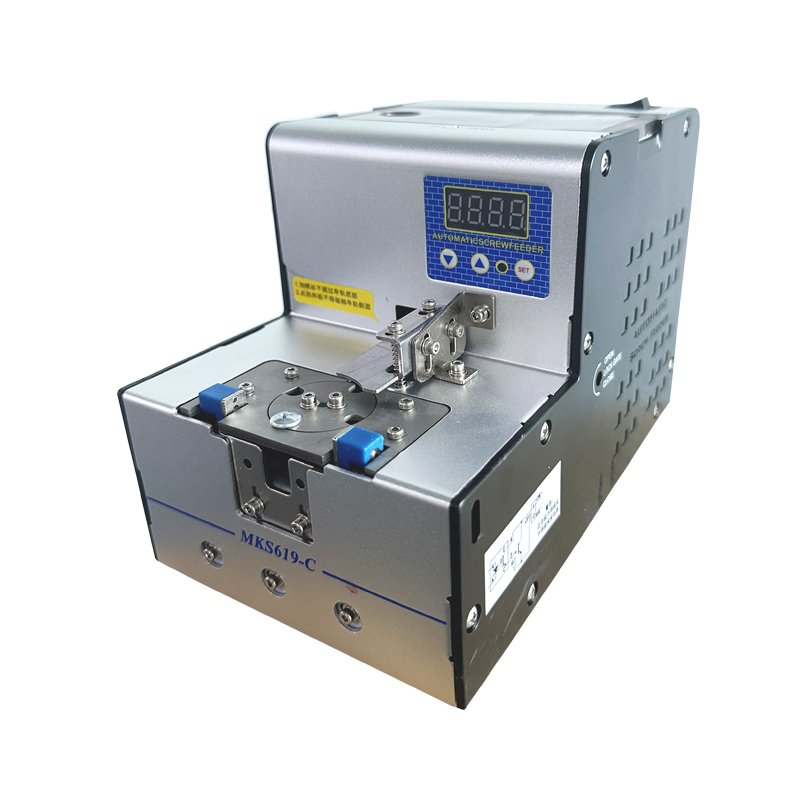
Prices for Standard Screw Feeders
Our standard screw feeders range in price from 1,500 to 5,000 yuan. Of course, this does not include international shipping costs. These feeders are only compatible with standard screws ranging from M1.0 to M5.0. For M6 screws, a larger feeder (requiring a larger hopper) is needed, which will be significantly more expensive. We’ll need to know the screw specifications and see images before we can provide a specific price quote! If you’d like to know the specific pricing details for the screw feeders, you’ll need to provide me with the screw specifications and images so I can determine the price.
Five Major Factors Affecting the Price of Screw Feeders
-
Screw Length
There are countless industries that require screw fastening, resulting in a vast variety of screws with varying lengths and irregular sizes. The price of our standard screw feeders is also influenced by screw length and size. For example: We have a model that can only accommodate screws shorter than 16 mm, priced as low as 1,500 yuan. Of course, its performance and stability are not as good as our standard models—after all, you get what you pay for. At Jush, we currently focus on recommending mid- to high-performance models. Returning to the topic at hand, shorter screws mean the hopper doesn’t need to be as large, so a compact feeder can save a significant amount of material.
-
Materials Used
Metal and plastic materials also differ in cost. All of our screw feeders are made of metal, which not only enhances wear resistance and scratch resistance but also prevents the “brittleness” that often occurs in plastic after several years of use—a problem that doesn’t affect metal. Even if a layer of anti-rust paint is applied to the surface of plastic, it’s ineffective because the deterioration begins from within the plastic itself. While the price may be lower, manufacturers often cut corners in areas that are never visible, and over time, these products tend to develop numerous minor issues.
-
Hopper Size
All screw feeders come in different hopper sizes. The prices of screw feeders designed for M1–M5 and M2–M6 screws vary significantly; the price difference between a small hopper and a large one can be as much as double. For example, increasing the usable screw length from 16 mm to 20 mm requires a larger screw hopper diameter. This is not merely a matter of materials but also a test of manufacturing expertise. While using 10mm-long screws may yield similar results with both types, using M6×10mm screws presents much higher technical demands! Without the necessary technical expertise, the feeder is prone to jamming or unstable feeding—these are common issues!
-
Screw Types
In addition to standard screw specifications, there are also combination screws and machine screws, which can significantly impact screw arrangement. This step cannot be skipped if you want to achieve automated screwdriving. We can use a vibratory feeder or a custom screw feeder. For example, if you need to use 35mm-long combination screws, does that mean the feeder needs to be larger? Otherwise, the screws won’t fall onto the guide rails and won’t be transported to the turret. This poses a technical challenge for manufacturers and is one of the factors contributing to the high cost of feeders.
Machine screws are also a common type in the industry. These are screws without heads, so they cannot be fed using conventional screw feeders because, without a head, they cannot be secured on the screw guide rails. The only option is to use a screw vibrating feeder, which uses vibration to transport the screws to a designated position and then blows them onto the chuck of the automatic screwdriver. Only then can the screws be fastened!
-
ScrewFeeding Methods
We offer turntable-style screw feeders, priced between 1,500 and 5,000, vibrating bowl feeders, priced between 6,000 and 14,000 yuan; screw feeders for air-blow screwdrivers, priced between 3,000 and 4,500 yuan; and a push-type feeder (for screws 35–45 mm in length), priced between 13,000 and 17,000 yuan.
Here, we’ll focus on the features of the air-blow screw feeder. The feeders mentioned earlier are mostly passive, requiring the screw machine to automatically move over to pick up screws and place them on the electric screwdriver, whereas the air-blow feeder actively conveys screws to the electric screwdriver. Picking up a screw each time takes time, doesn’t it? It takes only 0.8 seconds to pick up each screw. For 10,000 cycles, that’s 800 seconds. With 22 working days per month, this represents a massive loss in efficiency! That’s why knowledgeable customers choose the air-blow feeder as their screw feeding device. While the price differs slightly from that of a standard disc-type feeder, it more than makes up for it with its high efficiency. However, this feeder has specific requirements for the screws and cannot be used with just any type! If you’re interested in this feeder, please email me your screw specifications, and I’ll be happy to make a recommendation.
Push-type screw feeders have also become popular in recent years, primarily designed for extra-long and extra-large screws. The feeding mechanism is different: although it’s also an air-blow system, the loading process involves pushing the screws into a track inside the feeder, allowing them to drop into the track, and then using vibration to convey them into the feed tube, where they’re delivered directly to the electric screwdriver.
Screw feeders involve intricate engineering with many specific requirements. If you’re not familiar with this area, feel free to let us professionals help you select the right screw feeder—though of course, if you already have a suitable one, that’s fine too.
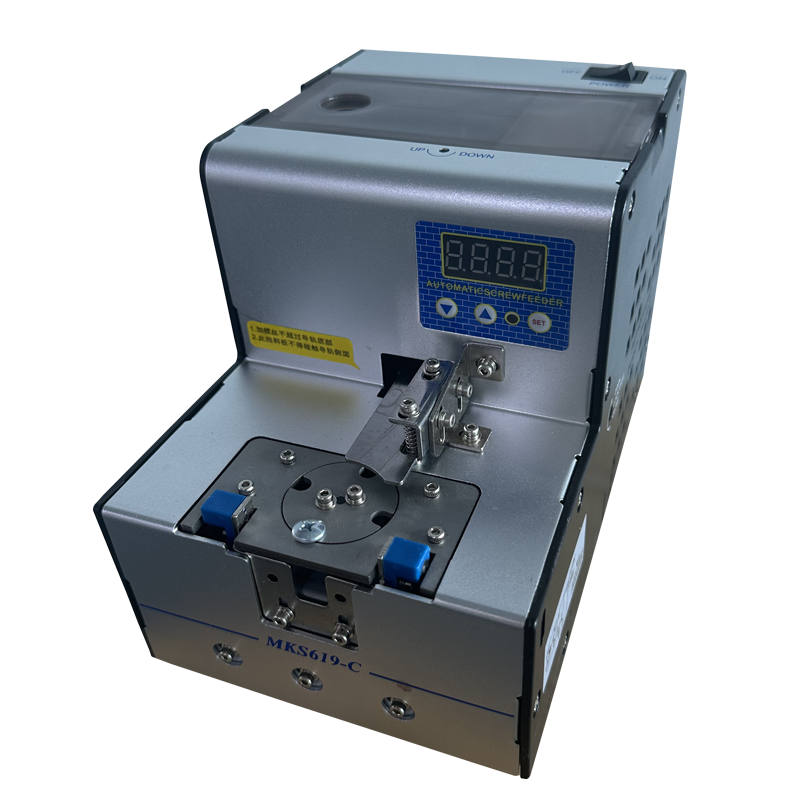
How to Choose the Right Screw Feeder
-
Provide Screw Specifications
You need to provide the manufacturer with detailed specifications and parameters of the screws, as well as the type of equipment used for fastening them—for example, whether you’re using a bench-top machine or a handheld screwdriver. By sharing this information, the manufacturer can select the appropriate feeding device based on your specific needs.
-
Feeding Requirements
Currently, the market offers three main types of feeding methods: air-blow feeding, turntable feeding, and push-type feeding. Be sure to communicate your specific feeding requirements to the manufacturer.
-
Send Photos of Your Current Screw Feeder to the Manufacturer
Some factories may be unfamiliar with feeding systems and unable to identify the exact model needed. In such cases, send photos of the machine to the manufacturer. After reviewing the images, the manufacturer will generally be able to determine the appropriate feeding system required!
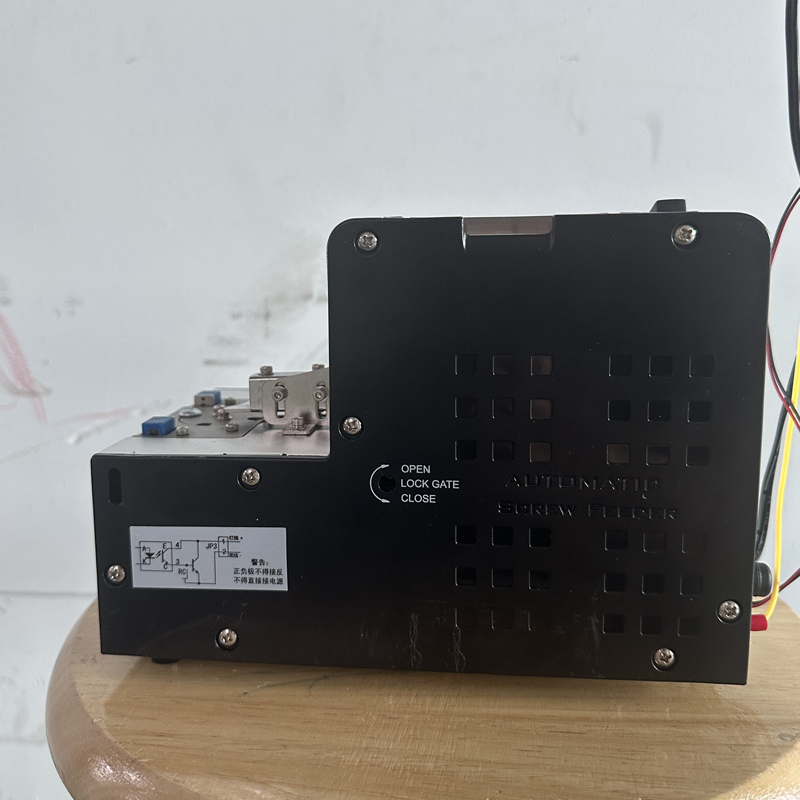
Summary
This guide has provided a detailed overview of screw feeder pricing and the factors that influence it. While some details may not have been covered in full, please feel free to email me if you have any questions! I’ll be happy to answer all your questions in detail. Although our main focus is on selling automatic screw machines, we’re also very familiar with screw feeders—since all our equipment requires them. With our extensive hands-on experience, we’re fully capable of helping you select the right feeder. Feel free to reach out with any inquiries!