
An Article That Explains What an Automatic Screwdriver Machine Is
A screwdriver machine is a type of automated auxiliary equipment used for fastening screws onto products. For example, when fastening screws to a circuit board, manual and electric screwdrivers require workers to place each screw onto the board one by one and then tighten them by hand. This entire process is time-consuming and labor-intensive. Performing this task over the long term can easily lead to arm soreness among employees and may also result in screws not being tightened properly, causing quality issues. A screwdriver machine, however, does not have these problems.
一、How a Screwdriver Machine Works
- The screwdriver machine is equipped with a screw feeder. When screws are poured into the feeder, they are automatically conveyed to the turret. The machine’s Z-axis can move to a specified position to pick up a screw.
- The machine axis can be positioned at the hole location where the screw needs to be fastened by setting coordinate points. The Z-axis-mounted electric screwdriver then fastens the screw to the product. The electric screwdriver features torque control, preventing stripped threads during fastening.
- Various types of drive sensors are installed on the machine axis to detect whether the screw has been fully fastened, as well as to detect missed fastenings and stripped threads.
二、Types of Screwdrivers
There are currently many types of screwdrivers, including handheld screwdrivers, desktop automatic screwdrivers, floor-standing screwdrivers, and high-precision vision-guided screwdrivers! Let me introduce you to the features of these screwdrivers
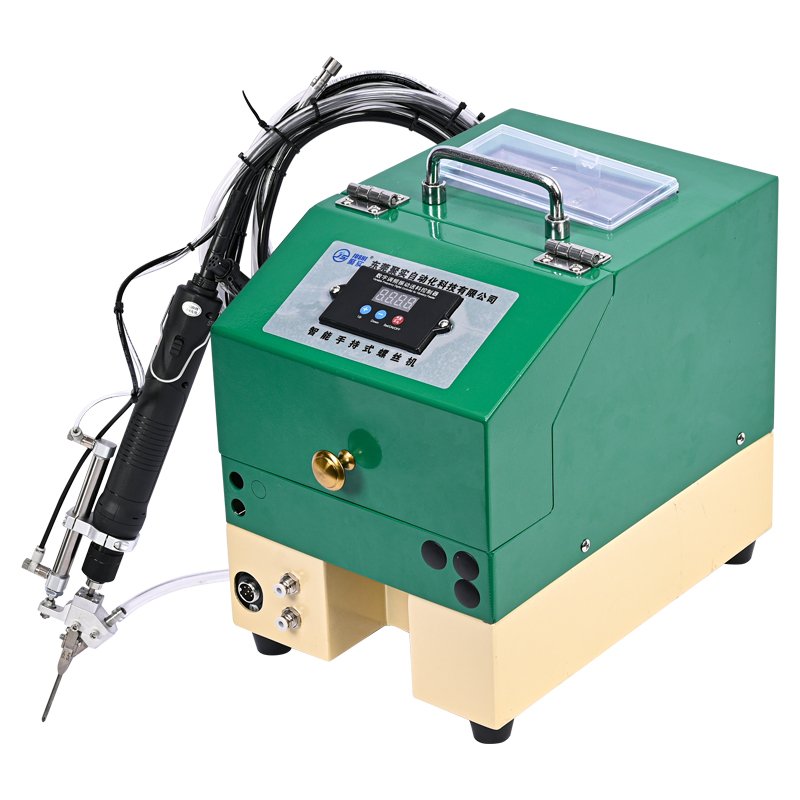
Handheld Screwdrivers: These consist of a screw feeder combined with a brushless electric screwdriver. Screws are placed in the hopper, where they are blown into the screwdriver using compressed air and then pushed onto the bit by a pneumatic cylinder.
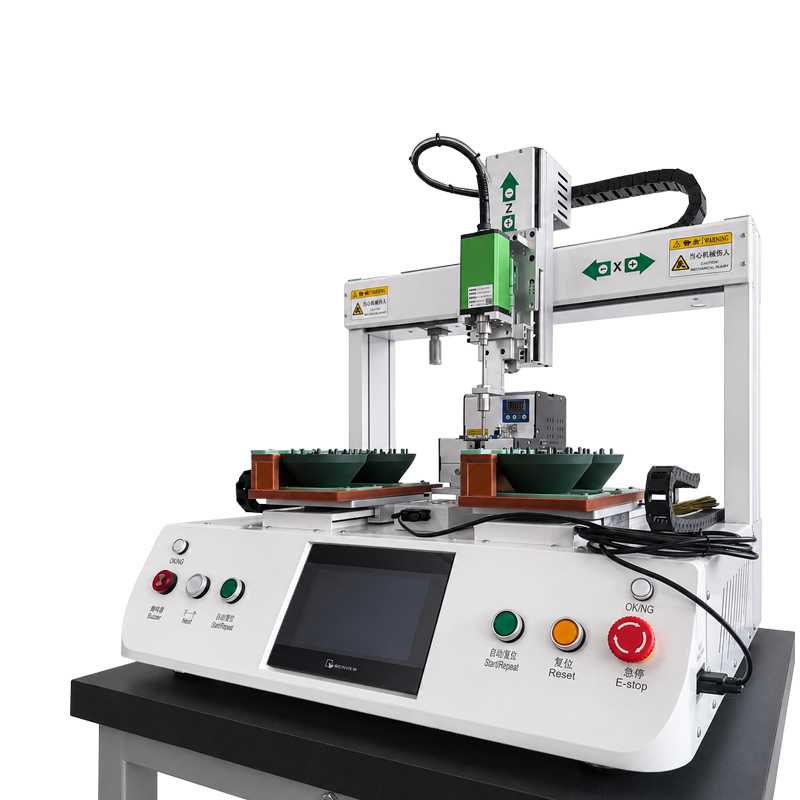
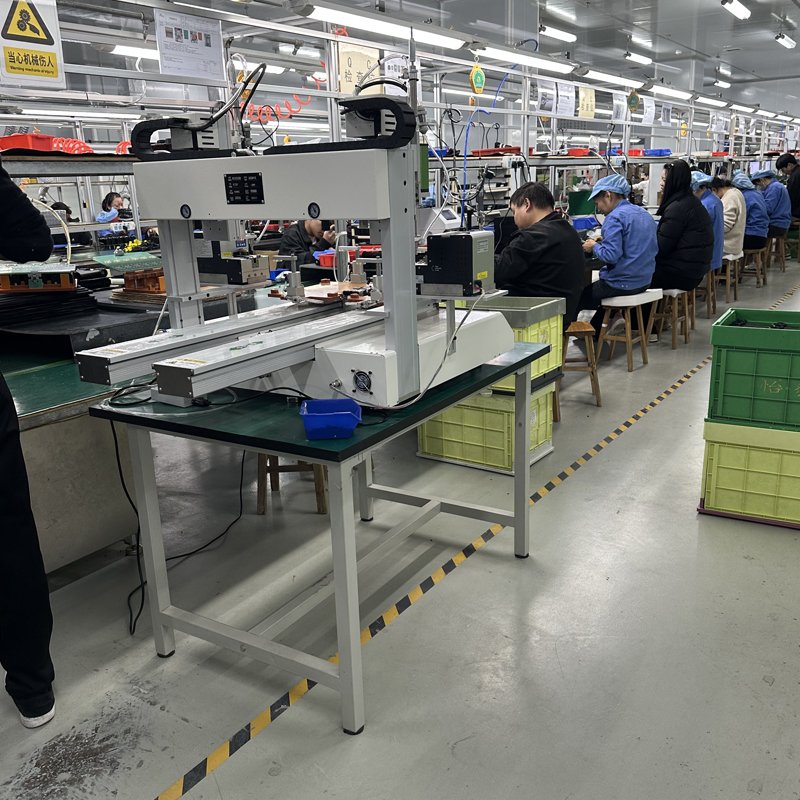
Benchtop Automatic Screwdriver Machine: This machine features a dedicated platform equipped with X, Z, and Y axes. The Z-axis holds the electric screwdriver, the Y-axis holds the product, and the X-axis moves the Z-axis. Simply place the product on the Y-axis, press the start button, and the machine will automatically tighten the screws. Its efficiency is approximately three times that of a handheld screwdriver.
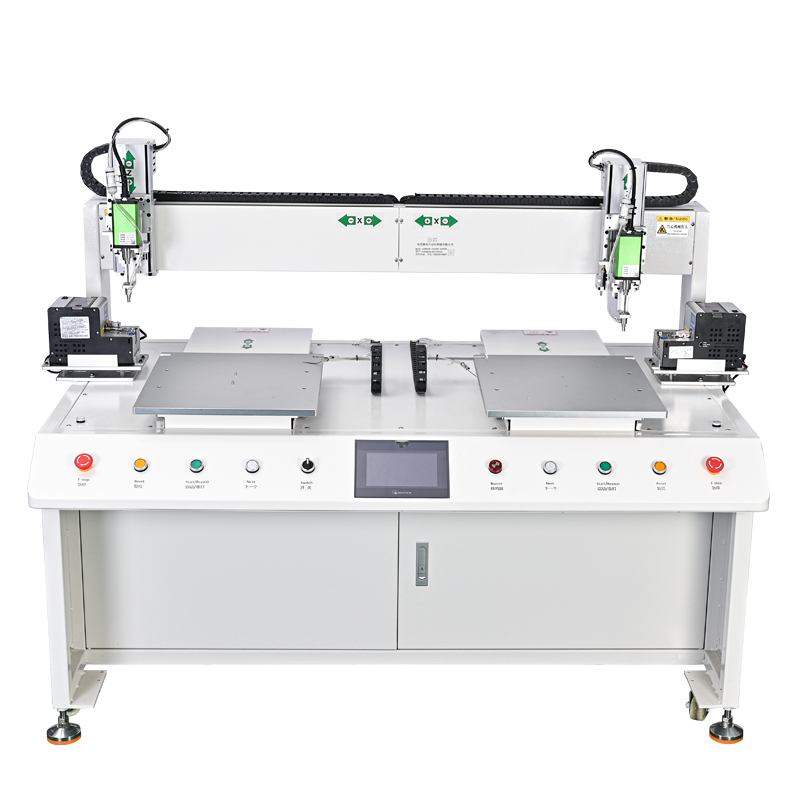
Floor-Standing Screwdriver Machine: This is a large-scale screwdriver machine platform with moving axes typically reaching up to 1000mm in length. It offers higher stability and can accommodate large products for screw fastening, such as chairs, car door locks, and large home appliances.
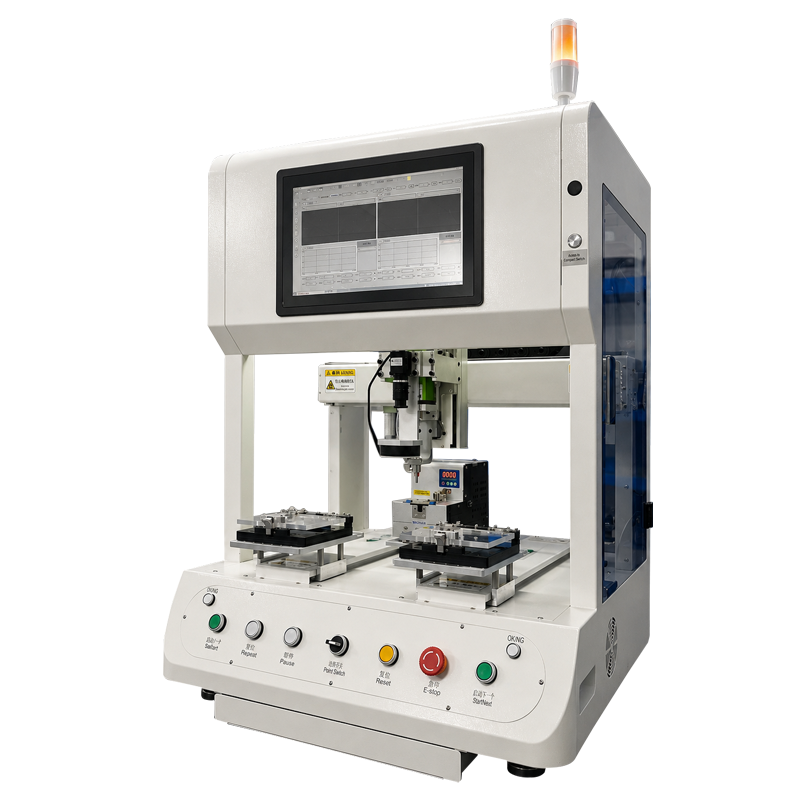
Vision-Guided Screwdriver: This is a screwdriver equipped with vision-based positioning and an MES system. It enables positioning and fastening on an assembly line and records the torque value and fastening depth at each point. The data is transmitted in real time to the industrial control computer and can be accessed at any time.
三、Advantages of Using a Screwdriver Machine
-
Screw Fastening Efficiency
Screw fastening efficiency is significantly improved. With an automatic screwdriver machine, it takes approximately 1.8 seconds to fasten a single screw—three to four times faster than manual fastening. The advantages of automatic screwdriver machines are particularly evident during high-volume production. Their precise operation ensures continuous production without stripped threads or missed fastenings, thereby guaranteeing a smooth production process.
-
Screw Fastening Precision
The repeatability of an automatic screwdriver machine can reach 0.05 mm, which essentially guarantees consistency at every coordinate and ensures that every screw is accurately fastened into the product. This mechanical, repetitive production process meets standards that manual labor struggles to achieve—as human workers inevitably experience fatigue over long production periods. Replacing manual labor with machines not only guarantees quality but also protects employees.
-
Stable Production
Machine production times are generally fixed, with stability primarily dependent on the speed at which employees load parts. Since employees no longer need to perform the fastening process—they simply place products onto the machine platform—the overall workload is relatively light. This ensures stability in both production output and product quality. Additionally, the machine performs certain quality checks on the fastened products.
-
Applicableto a Wide Range of Screw-Fastening Scenarios
Factories do not produce just one type of product. Machines can meet the fastening requirements of many industries, including 3C electronics, beauty and hair care appliances, medical devices, and household appliances. A typical factory produces over a dozen different products, and each product may have several models. While the models differ, the screws required for fastening are often the same. A single machine can meet the fastening requirements for several or even dozens of products, making it highly cost-effective!
Screwdriving machine technology is advancing rapidly. With the rise of vision technology, intelligent manufacturing has become the choice of leading industrial enterprises! Fully integrating the screwdriving process with the production line—from parts to finished products—and having the entire process completed by automated equipment is now the production solution adopted by many large enterprises. Automation has become the top choice for every company!
四、How to Choose the Right Screwdriver Machine
When selecting an automatic screwdriver machine, there are several factors to consider: precision, speed, and stability. Machine prices can vary significantly. If your product has high precision requirements, you’ll need to upgrade the machine’s precision specifications—for example, by replacing linear guides with ball screw guides to improve screw fastening accuracy. Therefore, please let us know what products you manufacture and what your specific requirements are so that we can tailor the screwdriver machine to meet your needs.